Showing posts with label % % % % %. Show all posts

Saturday, December 11, 2010

The Road - % % % % %


I have not seen such an engrossing and encompassing film in many months. Something about the intensity of the genre demands the audience's attention, and yet this film was more penetrating in its sparseness and more emotional in its anonymous performances, making none its equal.

Marvelous. It is a miserable story. At its core is the essence of why we live. In creating a truly desolate world, the story from the novel "The Road", by Cormac McCarthy, strips away the other concerns in life that we are cluttered with living in modernity. This leaves the hunt for food, the fear of danger and violence and then the radical question, why live at all?

After an unknown apocalypse of such extreme proportions that all life aside from human has ceased, a father and son head south. Flashbacks expand on their situation, telling the backstory of a wife and mother, Charlize Theron, who finally gives up so completely and, spoiler alert, removes her layers of warm clothing to walk into the dark and cold wild. Alone with the boy, the man, masterfully played by Viggo Mortensen, trudges along fighting to get the boy to an age when he can survive on his own or prepare himself for the likelihood of merciful suicide. The film deftly allows in the most gruesome of realities without reveling in their monstrous power. Many of the surviving people have taken to cannibalism since all of the animals and plants are dead. The horrors of this environment are acknowledged and momentarily explored to establish the extreme danger for the pair, but are not embraced with prurient thrill as is often the case in the apocalyptic genre. The film is filled with fear and allows horror, but is more elegant than a more base thrill or shock. Rather, it holds the suspense of morality at its core. Is this the right decision? Can I live with this choice? What will be the consequence of my decision? And the suspense of these moments does not fade in the resolution of the events because the mind holds the tension of such moments long after they have passed.

This is a story written with a masterful understanding of the human condition at its essence. It is brilliant.

The film is dominated by gray and dirty landscapes of dead trees and decayed society. Interspersed with poignant close ups of hands clutching at tenderness and tears trickling down worn cheeks, the story keeps the man and his son at the center. They don't have names. They are unnecessary in this world since other people are a danger, and everything unnecessary has been stripped away. There are moments of joy interspersed accidentally in their journey. A swim under a waterfall. A discovered can of coke. The embroidered couch cushion with blue flowers in his parents' living room. Some elements of modern life that we occupy ourselves with remain in this wasteland.

The performances are universally real and compelling. I can't imagine how a director was able to elicit such a performance of raw fear, vulnerability and justice from a child. Extraordinary. The scenes involving strangers like Robert Duvall, Guy Pierce and the underused Michael K. Williams
(c'mon and hire this man more, people! He is Omar from the wire and the most extraordinary actor from the whole series! That man needs a better agent!) are filled with fear, curiosity and tenderness. They allow the film to breathe, filling moments with the real grace of life, human connection. And that is what leads to the unexpected happiness of the ending. It seems unimaginable until it finally happens and is in parallel with sparse, barren nature of the film. This visual metaphor, the boy and the man alone in a barren world illuminates the core of the story. Human connection is the reason for life. It's the reason to go on. It is what love is. It is what life is. I am astonished by the profundity elicited by this film and moved by how effective it is in pervading an audience with its story and themes. Magnificent. Magnificent.

Director John Hillcoat's previous film "The Proposition" takes another raw genre centered around survival and the human condition, the Western, and offers a bleak and cruel perspective as well, but not to the same effect. In The Proposition, familial loyalty is tested and the situations never create enough tension to mentally shake the audience into philosophical crisis in the same way that he manages to in The Road. And he's Canadian. I didn't think it possible for a country with a functioning NHS and little poverty to speak of to produce such a morose dude, but I guess those long winters can put one in touch with the power of bleakness. Really a fantastic movie. Brilliant.

Saturday, November 6, 2010

American Experience: We Shall Remain - % % % % %


It never ceases to amaze me how little I know about North American Native American peoples. I learned all about Aztecs, Maya, Incas and Nazcas. But I know diddly about Algonquin or Shawnee people and culture.

This series is beautifully constructed of recreated scenes and interwoven interviews with historians and descendants of the historical figures. Watching the first episode I was struck over and over how enlightening this program is. Our children's history books are mediocre and fail all of us.

Sunday, September 6, 2009

Besieged - % % % % %


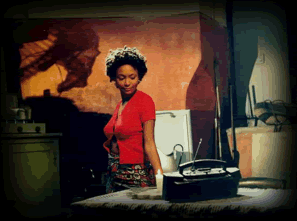
Why is this film not talked about more often? It is beautifully executed by a filmmaker, Bernardo Bertolucci, at the peak of his abilities. It stars Thandie Newton and David Thewlis in daring, subtle and charged performances. It is from an excellently written script, Bertolucci and wife, Clare Peploe, brilliantly adapted and changed from a short story by James Lasdun, The Siege.

Shot by shot, the film is composed of elegantly selected perspectives which follow these two characters, "emotional exiles" and their developing love for one another. Shandurai is an African immigrant fleeing trauma and seeking a new life as a medical student in Italy while working in the home of a solitary pianist, Mr. Kinski (Thewlis). Newton is beautiful. She is extraordinarily beautiful. Thewlis has shown potent sexuality in the films of Mike Leigh and here he is reclusive and intense. The strength of the character develops through his music and implied actions.

After declaring his love for her, she is terrified and infuriated. He demands to know how he can make her love him and she tells him that he could get her husband out of prison in their home which has become a military dictatorship. He is stunned at not even knowing that she is married. And here begins a parable of devotion and love. The film opens with a folksinger singing in Luou, and he appears in Shandurai's dreams, pressing her feelings and passions forward. Spoiler: He sells everything, his inheritance and eventually his Steinway, his voice, to buy the freedom of her husband. She comes to love him and they share one night together, and in the morning her husband arrives at the door freed.

The film is nearly silent, but for the powerful presence of music: the piano played by Kinski and the African pop music loved by Shangurai. The film unfolds detail by detail and in the excellent commentary by Bertolucci and Peploe, Bertolucci explains that he wants to follow the style of Hitchcock, by creating suspense in the audience. It is a story of two wounded souls who must press beyond their safe, structured lives in order to find love and companionship. Maturely, there is not a traditional happy ending, but rather an understanding, which is often the most that can be hoped for in adult relations.

In the commentary, Bertolucci reveals that he doesn't do a storyboard. He creates a shot list the day before. He digests the material and then proposes a means of approaching the story. I can't believe that. His Cinematographer must go nuts. He also talks about showing off in his shots, being acrobatic, and he feels that age has subdued him. True, Il conformista is a dazzling film. And yes, Besieged is more subtle, but the editing is more challenging and exciting. Close-ups of Newton are divided, using jump cuts to strike notes of emotions, "palpitations of the heart of the movie" he describes in the commentary. For example, two shots of Newton getting news of her husband were taken in two different emotional tones and then intercut to create a complex moment and story. The film was shot with three cameras! What a luxury!

The themes of loving difference, the means of moving towards another and the connection between generosity and passion. I can go on and on. It's wonderful. Unexpectedly, the love scene is so different from Last Tango in Paris, for example. They put their legs over one anothers' in a tender moment and awake at the final moment nude and embracing, preventing the other from moving without one's consent.

The film feels small in many ways, stemming from the intimacy of the cast and location in a beautiful Roman home, pierced through by a spiral staircase. There are entire characters whose faces we do not see. We only see what is important and essential. This narrowness makes it feel like folklore, a modern parable, leading to a moral that generosity and self-sacrifice lead to, and are inherent in intimacy and love. It's wonderful.

According to the author of the short story in the commentary, it is based upon a medieval tale by Boccaccio. So there.

Saturday, April 11, 2009

Let the Right One In - % % % % %


OK, obviously not featured by Vogel, I am still watching other films, and I streamed this one as my Saturday afternoon comfort film.

I don't even know where to start. The sound is outrageous! The background sound is amplified over the dialogue at times. It's incredible. It's as if one were underwater and occasionally bobbing up and catching clear bits and slipping away again.

Incredibly shallow focus complements the sound design. It's gorgeous and creepy.

I'm not sure that the boy who befriends the vampire girl really does learn to stand up to the bullies, but rather he learns to not be afraid of them. He accepts their violence without rage or revenge. But allows his girlfriend of the night, not a hooker but a vampire in this instance, to fight his enemies for him.

I'm also not cool with the resolution to the bullying being spoiler alert them getting a violent comeuppance. This is a film that asks us to understand the challenges of Oskar's mother raising her son alone and the challenges of Eli needing blood, and therefore victims. How can we not sympathize with semi-murderous little boys trying to prove themselves? There must be a reason for their cruelty. Just as there are reasons for the main characters' murderous behavior. Even Oskar fantasizes about murdering at the beginning of the film, so I can't blame the other boys enough to want them dead. So the continuation of the friendship at the end after the gruesome murders of an innocent man, investigating the death of two of his closest friends, and these boys feels sad for Oskar. I don't know what would have been a better ending, but there is one out there. Perhaps what would be better is an ending in which Oskar learns to live on his own and without murder as a complication and crutch. I don't think every film needs to have a happy ending, but maybe someone can tell me what Oskar's decision means or comments on within 70s Swedish society. Perhaps I don't know enough about the contextual society to understand Oskar's continuing allegiance with Eli.

I love their relationship. It is brilliantly written. The two are so awkward around each other at first and unsure of how or what to communicate. They are both so lonely. Oskar is so frightened and needy, and Eli is sad and aloof. But the progression of the two towards each other is delicate and the change in Oskar as he comes to understand that Eli "is not a girl" is remarkable. It is so subtle and then powerful. He becomes the protector for a moment. And in that moment when faced with the reality of the violence he runs, rejecting his safety blanket-hunting knife. It seems in this moment that Oskar has rejected violence, but no. He just can't do it himself.

But I can't think of the last time I've seen such amazing acting from two children. And the setting of 80s Sweden is super cool looking.


My questions for others who have seen the film: Do you think his dad is gay? Why do they call him a pig?

PS. I think I've realized why the film treats bullies with such vengeance and why the relationship between Eli and Oskar continues. And why Eli's caretaker is with her. And it's that this is a horror film. The most frightening thing possible is that one might only have sympathy for their own murderous actions and not for others. The truly frightening world is one in which survivors of torture would enable and commit far worse acts against their bullies. And find joy and relief in those heinous moments. And love in their selfish cruelty. Eli starts out sad and forlorn for having to murder, but finds a purpose in the end for her violent cravings. If one can have love, one may do anything and justify anything for the love of another. And that is truly terrifying.

And I've gotten a submission for the question of why the little boys call Oskar a pig. It stands for Parent Is Gay. I don't think it's a winning answer, but it's a contender.

Check out the May edition of Sight and Sound magazine for a great article on this film.

I have one challenge to the article. In it, Mark Kermode argues that sex isn't the source of the horror, but I would argue that sex is more important than he gives it credit. The one particular moment of unabashed sexual curiosity ends in a dead end. Eli doesn't have genitals, but rather a shriveled up, kind of scab where one's vagina would be. Oskar wants to see her naked but discovers this oddity about Eli. They will never consummate their relationship and this, I suppose, makes their departure together more tragic. She can never be what he needs and she needs something so destructive only doom must follow.

Kermode also discusses some elements of the source material that are not included in the film. There is apparently a greater emphasis on transgenderism.

Thursday, February 26, 2009

The Blue Angel (Der Blaue Engel) - % % % % %


Devastating - Marlena Deitrich, the essential femme fatale, seduces a professor whose life crumbles away into disgrace. Emil Jannings yet again performs misery brilliantly. Much as in The Last Laugh, his character begins as a pompous man and is transformed by the cruelties and unsympathetic nature of humans into a humiliated and degraded madman. And then he dies. There is no pitiful reprieve as in The Last Laugh.

Directed by Joseph Von Sternberg, in 1930 German Expressionism was fading in films, after the financial crisis at UFA because of the lavish production of Fritz Lang's Metropolis. The town appears dark and aged. I felt as if I could hear the creaking of the medieval staircase leading to his attic room at the school. And the club for which the film is named is a dark hole of drunken sailors jeering equally drunken dames in their drawers. The star is Deitrich. She struts around, hands on hips, shoulders hard, glowing with sexuality.

(Spoiler - skip to next paragraph if you like surprises)
At first one might imagine that she could benefit this professor who gives up his job to marry this fallen women. But no. I don't even know why she'd marry him except that perhaps she believed no one would ever ask her and she'd like a man-servant. Shortly after their marriage he has decayed into an unshaven shlub peddling nudie photos of his wife. And four years later he is forced to return to his home town to perform in his wife's show as a clown assistant to a magician. The magician cracks eggs on his head and the audience of his former pupils laughs him into total insanity. His wife is making out with a useless strong man performer who is super hot for her. The sight of this drives him to attack her while clucking like a chicken. It's so frickin crazy amazing. I actually believe that this simple man might totally lose it and freak out in this extraordinary way. It's wonderful. And the closing shot of the film is marvelous.

It starts slowly, but be patient. The climax and Dietrich are worth it. It's totally depressing but also amazing.
Wednesday, February 11, 2009

City of Cranes - % % % % %


A rumination on the experiences of crane drivers, floating above London, between buildings, carrying great loads with concentration and meditation. This 14 minute short doc is wonderful to watch. It's charming, narrated by interviews with crane drivers, and it's absorbing, marvelous and wondrous, filmed mainly from the crane operators' perspective, containing abstract images of modern life and the balletic dance of the epic cranes sweeping through the city.

At 14 minutes, you should definitely check it out. Next time you sit down for dinner or a snack, instead of turning on the tv, go to POV's website and watch. Glorious.

Directed by Eva Weber. The website for the film. She has also directed The Intimacy of Strangers, available on the Full Frame compilation, disc 5, available on Netflix. I'm bumping it up on my queue, rest assured.

Sunday, February 1, 2009

Jericho - % % % % %


I can't believe it myself, but I just watched all of Jericho in two and a half days and I was on the edge of my seat and crying and thrilled almost the whole time.

Yes it is super-patriarchal and there are some philosophical questions I'd like to pose to the writers, like should a town continue to be run by the same family for three generations?

But I really loved it! There is just something about a post-apocalyptic world that is fascinating. And you all have probably heard me talk about how Red Dawn is one of the greatest films ever made. I really love the passion of survival and the notion of resistance.

And it is a total fantasy that any group would be able to survive like the citizens of Jericho do in this show. They held on to their morals in an extraordinary way and still came out alive and strong, for the most part.

It is a totally white town, with the exception of a CIA agent who just moved in. That unto itself bothers me immensely. Apparently we can only get along with a black family that makes every sacrifice for us and are badass killing machines. And the only Latino on the show is named Beck. And even this very brown German man (he could be Argentinian or Brazilian, but come on! unlikely) has to work very hard to overcome his allegiance to a foreign power of evil.

And the women, while very plucky and "tough broads", are still just girlfriends. They fight alongside the men, but they are rarely leaders. It's getting there though. In Red Dawn, the women are pathetic, traumatized rape victims. So there's definitely improvement.

I will say that the acting is actually pretty decent. Skeet Ulrich totally steps up to leading the show. His father and mother, played by Gerald McRainey and Pamela Red, are excellent stalwart tv actors and they are magnificent centers to the first season. And no one should talk about this show without discussing the marvelous Lennie James. He rules the show. He is captivating as a mysterious CIA agent with many many secrets, all of which could turn the world upside down. A revolution for the post-apocalyptic world. He's fabulous.

Oh, and in opposition to HBO writers whose shows get canceled, these writers wrapped it all up in a timely and satisfying fashion.

And even though the super bad guy is fighting for the same thing as the good guys, he is still bad because he's willing to kill civilians. So it is very true to American and Amurican values.

I have always been very anti-guns. Although I certainly see the need to have a well armed defense force. Allowing citizens to own firearms has given the US a death rate per capita by handguns alone that is 2000% that of other similar nations. Pretty gruesome. And the main reason that Canada doesn't have the same extent of the problem seems to be its lack of horrifying poverty.

So when we eliminate the main causes for violence, which generally boils down to inequality and extreme poverty and desperation, then I'll be totally behind more liberal interpretations of the 2nd Amendment.

Until then, I don't want more firearms in my city. Hell no!

On the other hand, and the reason that I say all of this, is that I do understand the value of being able to handle a firearm and I do agree that a militia to defend against tyranny is also valuable. I just think that there are still other ways to make improvements and changes to our society other than with violence, although I'm not surprised when others don't come to the same conclusion.

If you take away the non-violent means for change, you leave only the violent means.

All power to the people.

Monday, January 26, 2009

Stroszek - % % % % %


OK, it's by Werner Herzog, so I obviously love it.

But this is one of his fiction-ish films and it is remarkable for its close relationship with the characters in an almost loving and appreciative way. A socially awkward, ?alcoholic, musician gets released from an institution and along with a beaten down prostitute and his elderly neighbor, they move to the neighbor's nephew's town in rural Wisconsin. While Wisconsin is an improvement in many respects, these three simply do not form a family.

Bruno Stroszek, the musician, appears at first as simple-minded, but soon shows that he is quite capable of extraordinary philosophy and a passion for music fulfilled in his instrument collection and his outdoor concerts for local apartment buildings. Eva, the sex worker, has a truly skeevie set of pimps who beat her for having sex with someone at the opening of the film and then again for not making enough money to get their stuff out of hock. And then again. They walk into Bruno's house and humiliate him, tearing apart his accordion and taking Eva off. Herr Scheitz, Bruno's neighbor, suggests that they all move to Wisconsin with him. Herr Scheitz' nephew is a humorous local mechanic native to Railroad Flats. His only German is to say, "What's loose? The dog is loose." But he is an endearing sort of fellow to offer his uncle a home and his odd friends work and a new life.

These three find solace with one another. Bruno needs companionship and affection, Herr Scheitz needs companionship and conversation, and Eva seems to need safety. But as time goes by, their support of each other is not enough. Upon entering the country, Bruno's beloved bird is confiscated. He left all of his instruments behind except his horn, which he plays atop the Empire State building on their way through New York, and his according, which is barely ever used again.

I kept thinking throughout the film that it was going to quickly spiral out of control and spend the last hour wallowing in horrible misery. But it doesn't. Yes, everything falls apart, but in a quirky, almost delightful way. These characters are not filled with pathos and self-mutilative desires. They try to keep it together. (Skip to the next paragraph if you want to keep the ending a surprise) Eva needs to take care of Eva, so she leaves with some truckers to go to Vancouver. Herr Scheitz concludes that the reposession of their trailer is a conspiracy and attempts to hold up the local bank. When he finds that it's closed, he and Bruno hold up the barbershop next door and then, after tossing the shotgun into the front seat of their car, run across the street to buy groceries. Herr Scheitz is arrested and Bruno runs off with a frozen turkey and the shotgun. It's almost madcap and relieves the oppressing misery of so many films which depict a downward spiral. And thank god! I can't handle another Sherry Baby. Ugh.

I think we all know the other shoe is going to drop. Nothing really ends in happily every after. So is it really illustrative of anything other than repetition or lack of creativity to tell the same miserable story again and again?

I hope to never tell such a miserable story as Sherry Baby or anything by Lars Von Trier. I am not a sadist, nor much of a masochist. It's not instructive to repeat the same narratives again and again, with no illustration of anything new or hopeful or even causal. Where do we make mistakes? Are there good things that come from mistakes? If we all live in misery forever and ever and over and over again, well, lets just nuke the place. But we don't. There are wonderful redeeming elements in life and we do think that it will change and maybe be better. Enough with the ominous dread. Even sad endings can be more than miserable.

Which is why Stroszek is great! There's a dancing chicken at the end! Chickens are always funny and this one is magnificent.

Saturday, January 17, 2009

With All Deliberate Speed - % % % %


Combining myriad source materials, interviews, readings by celebrities, and narration, "With All Deliberate Speed" moves from segregation, through the Supreme Court cases that led to Brown vs. Board of Education and into the present day devastation of the public school system.

Made by Peter Gilbert(Hoop Dreams, At the Death House Door, Kartemquin Films), much of the film is spent on meeting and detailing the struggles of black students and their community in fighting court cases which led to Brown. It is a searing reminder of how far we have come that such violence is no longer commonplace. Mixed in with these testimonials though is contemporary footage of black students in today's dilapidated and, once again, segregated schools. Instead of using the law to segregate white students from black, today's white America uses their financial advantages to put their children in private schools and once again, limits the funding of the facilities, thereby leaving black students in unsafe buildings with few books and little respect.

I am torn in my opinion of the film. I think that it is excellently crafted. The narration by Jeffrey Wright is, as is everything he does, marvelous. And yet, the film misses the drama of the subject. It comes close, but I'm not sure that I understood the fear of these children. I am profoundly affected by their continuing emotions on the subject. To know that these experiences have stayed with them all of their lives is profound. And I sympathize greatly with today's student activists, battling a system so much larger than themselves. But the overall tone of the film is sadness that so little has been accomplished by such a great victory. I think I want to see the rage of injustice, but that might just be my personal enjoyment of indignation.

Thursday, January 15, 2009

Hail the Conquering Hero - % % % % %


another laugh riot from Preston Sturges.

The funniest war film ever made. And the most inspiring film about Marines I've ever seen.

Seriously, ridiculously, laugh-out-loud funny.

You want plot twists, there are plot flips and flops and flips again.

You want heart-warming, there's love, compassion, honesty, humility, courage, triumph over evil, and the love of a mother.

You want humor, it's written and directed by Preston Sturges. There's physical comedy, dramatic irony, slapstick, witticisms, ridiculous characters and lovable characters.

It's great! They sure don't make 'em like this anymore and it's a damn shame. But then again, this movie is so great, there's no need to make another.

Yeah, I know the acting is wooden and the love interest has a botoxed expression, inexplicably well before the procedure was invented. But so many of the other characters are so wonderfully ridiculous, like the mayor, the guy in charge of all of the parades and events, the mother-loving marine, and best of all (as always) the Sarge! (William Demarest, best known as Charley from My Three Sons)

Tuesday, January 13, 2009

Slumdog Millionaire - % % % % %


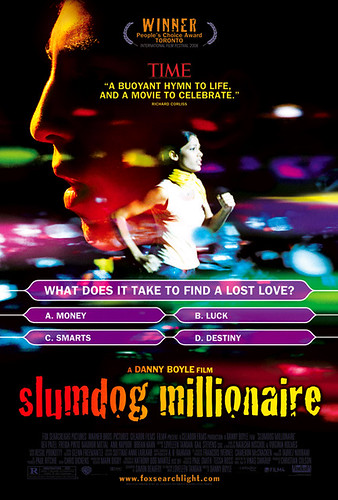
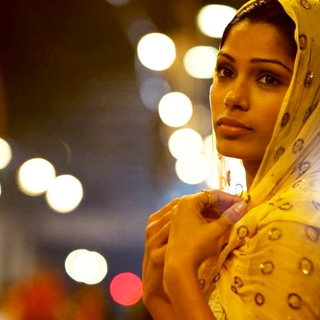
I really don't have more to say on this film that hasn't been said a bajillion times elsewhere.

I wonder if Danny Boyle goes through life looking for subject matter that fits well with his aesthetic style? Druggies, apocalyptic sci fi, India... Fast paced, colorful, gritty,... Mumbai! Totally fits.

I also like that he is a filmmaker who isn't trapped by his own culture. We're always told to "write what you know" and that translates into only telling stories about people like us in ethnicity, culture, gender, socio-economic background. But that only propagates the dominant and privileged culture. If only white men have access to the expensive and narrow supplies of filmmaking and they tell stories about white men, we'll just continue the structure of privilege. I want to tell the stories of those different from me, but of course that means I'll probably do a kind of crummy job, because I speak from my limited perspective. But it's what I find interesting and we need to know more about others. I'm still working on this theory/methodology. We'll see where it goes.

So yeah, go see Slumdog Millionaire, and not just because it won the Golden Globe, but because it's a great story about childhood in difficult circumstances, horrific circumstances, and it's about how to live nobly as an adult through difficult circumstances. We can use and abuse each other or we can embrace each other and rise up together. And it's beautiful and ends with a Bali-wood dance which made me so ridiculously happy. I hope it does well in India, where it opens this coming week.

And the soundtrack includes songs by M.I.A. How perfectly formulated for one another: MIA & Danny Boyle!

Monday, January 12, 2009

Encounters at the End of the World - % % % % %


I really do want Werner Herzog to narrate my life.

With his monotone, accented voice describing metaphors and philosophical ideas about life on Antarctica, Encounters cuts back and forth between glorious, magical imagery below the ice & in caves or fumaroles, and the more prosaic lives of the scientists and maintenance crews who live above in McMurdo, a US National Science Foundation base town, operated by defense contracters. He often cuts people's stories down by stepping in and saying, "This story goes on forever." He then summarizes and ponders some tangential thought projected off into philosophical space by the interviewee.

Yet these individuals provide an interesting medium for exploring human idiosyncrasies, one of Herzog's favorite topics.

Several people explain their theory that those who are not tied down to the earth, tend to fall down to the bottom. One fascinating interview is with a linguist on a continent with no languages. A compulsive traveler who possesses an odd carnival-esque skill of folding herself up into a piece of carry-on luggage.

Overall, Werner comes to Antarctica to pursue the question of why humans push our boundaries and how that makes us different from other species. He also mourns our marks upon the otherwise pristine face of nature.

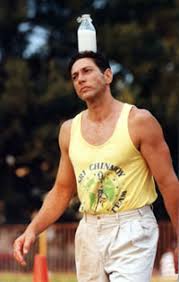
In a marvelous tangent, we go to meet Ashrita Furman who holds the world record for crossing continents by pogo stick, summersaulting, walking with a bottle on his head... Why do we have to push the limits? Why do we want to distinguish ourselves in such a manner?

In the commentary, Werner makes a hilarious and brilliant statement about this Furman guy: "There's something not right about it. It's a disease of civilization. ...Why don't we leave Mount Everest alone with its dignity. We do not need to be up there. The strange thing is all people of nature who live there, Sherpas, never climb these mountains. They would have certain reverence and they would keep the sacredness of the mountain in tact." A disease of civilization to push the limits to unhealthy, purposeless degrees. Hmm... That certainly puts a damper on the risk-taking philosophy of the US in the 80s. Hmm...

Why do these eccentric people end up here?

Through an interview with a penguin expert, we learn that female penguins may hook up with a male, let him "copulate" and then walk off with rocks from his nest for her own. And then we see a tragic penguin who wanders off into the center of the continent to die. Even if one were to drag him back, the penguin would immediately head back for the interior. It breaks my heart. I want to grab him and shout, "No! It's 50 km with no water and no fish! There's still swimming for you and delicious fish."

Suicidal penguins? Explorers? Disoriented or crazy? Hmmm... an interesting parallel for those we meet on the continent. In the commentary, Werner posits that disorientation may be an indication of insanity in animals.

These people are kinda nuts for living in such a dangerous place. Everyone has to learn how to survive in a white out, how to build an igloo to survive on the ice. Upon visiting a vulcanologist studying one of two open volcanoes in the world, Werner is warned to not turn his back on the crater, rather if a lava bomb were projected into the sky, he should look up at it and step out of its way as it comes back to earth. And apparently 30 years ago a team tried to climb down into the crater and towards the open magma lake. What?! Where were their mothers? I know mine would never forgive me so it must have been a team of orphans. Nutso. Of course there was an explosion of magma and the lead climber was injured.

Climate change is discussed, but in a doomsday perspective. Everyone seems to believe that we are on the precipice of going the way of the dinosaurs.

As markings of our presence for future earthlings, there is a tunnel to the mathematically precise south pole where several trinkets are stored including a frozen sturgeon, a photo of a green and blue lake, images of flowers, bad poetry and a wreath of popcorn. what? We are obviously doomed.

It is beautiful when away from the human settlements: an alien, majesty pervades the scenes, accompanied by choral music. The earth is extraordinary. Nature is remarkable. As one who lived nearly all of her life in urban areas, I've recently become aware of this and thanks to the national parks I've learned that we have gone too far. Why, why why must we possess everything? We'll all have to agree to have less for our sake and for the earth.

In the commentary, Werner says explicitly why I love his films. He says that through filmming, he fell in love with the world. In the earlier parts of his career, he explored the hideous internals of the human character, and now he seems to explore the grandeur of nature and the marvelous absurdity of humanity. I hope that in my films it will come across that I make films because I love exploring the world.

Sunday, January 4, 2009

Aguirre: Wrath of God - % % % % %


Extraordinary and epic. Man pursues glory, power, wealth, greatness. Man versus nature. Nature wins.

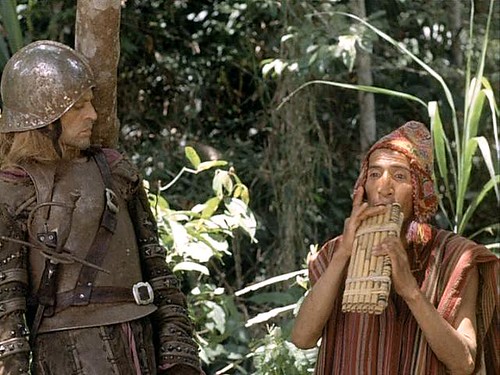
Klaus Kinski, as Aguirre, is a Spanish soldier of many who have set out with Pizzaro from Peru to search down the Amazon river for El Dorado, the fictitious city of gold. He undermines the royalty who begin in command. He sets up a puppet government with an emperor, and then kills him off. He begins as a hostile sociopath, and becomes a megalomaniac convinced of his great destiny and buoyed by his feverish mind and power over men's destinies that he declares himself, "The Wrath of God".

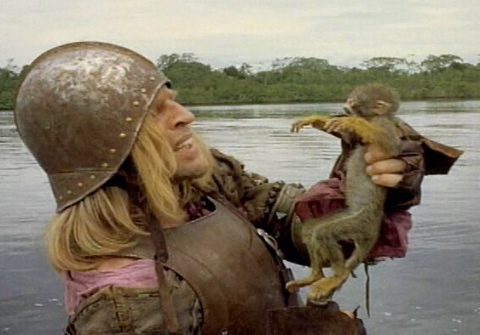
God certainly unleashes her/his wrath upon this group of conquistadors. Through simple attrition, Aquirre is the last man standing. His force of will propelling him on, even though his pathetic, sinking raft of death is covered with wily, tiny, swarms of monkeys.

In his final monologue, and I'm not giving anything away to say that no one ever found El Dorado, Aguirre declares that he will put on history like a play. He will be god, writing the destinies of all, controlling fate. It is not just greed for gold, but rather what that gold can bring: a delicate beauty, a mighty army, a great empire. The tales of others' successes, particularly Cortez in Mexico, have fueled his desire to be a great man who can mold the new earth he has "discovered".

All of this enormous power struggle is set amongst the beautiful forests of the Amazon. We begin in the groups' final decent down from the mountains and into the forest. It's incredible how totally impractical these people were. Two women accompany the soldiers and their Incan/Quechua slaves. They are carried by four men in large covered chairs above the earth. The group has brought along several horses and a canon. I can't imagine how it is possible to get a canon, even in pieces, over the Andes mountains along precariously narrow trails.

As the end nears, the survivors become delirious with fever and starvation, and the film takes on what I can only describe as a Terrence Malick style. I haven't seen Malick's first film, but Badlands came out a year after Aguirre and I wonder if there was something in the air in the early 70s. The jungle takes on a magical quality. One of the women just walks away, in her golden gown, into the trees, vanishing without a trace.

The most eerie moment, aside from the end with the monkeys, is the abandonment of a horse. The horse had endangered the poorly constructed raft and so the "emperor" decides that it must be tossed overboard, still wearing its military style hood. The horse swims to the bank and stands in the trees and brush watching the raft slide away. The white loops rimming the horses eyes follow the crew. Aguirre looks back and I felt an unusual sensation of surreal regret.

It's a great journey and its punctuated by mysterious moments and intriguing character conflicts.

I wonder in what ways we may be like the conquistadors. How do we mold others' realities and lives to fit our expectations? How are we impractical and yet blind? How much do I desire to write the script of my life? Can I stop feeling the need to be a great person in history? Some feel the need to achieve fame, but I think many parents try to instill a desire for greatness in their children so that they will try, work hard and achieve some kind of success. But in young minds it often gets carried away. Do I have real, practical goals or are they too deeply rooted in a desire for greatness?

A very very good movie. It is after all, directed by Werner Hertzog. Ah, Werner...

Saturday, January 3, 2009

Doctor Who - the new series - % % % % % !!!!!


I am totally gaga over the new Doctor Who, courtesy of the BBC. It's still got nifty sidekicks, quirky doctors, danger, aliens and some odd science, but it's great adventure and features some outstanding acting from some of the cream of the crop of British acting.

Both Christopher Eccleston and David Tennant are fantastic. They are goofy, eager, energetic, but with a sophisticated charm that shows a depth of character.

And it's so well written. There's all sorts of talk about this being the golden age of television because of serial dramas like the Wire and Deadwood. And it's true. But I think that some more credit should be given to Doctor Who. There are several episodes that are outstanding in their complexity, tension and character development. Most of the series is just really fun, a little Buffy-ish at times, but there are particular episodes, especially "Blink", written by Stephen Moffat the incoming writer and executive producer in 2010, that are extraordinary and like nothing else on TV.

Check it out. If you're not into sci fi, or don't possess whimsy as a friend tends to put it, then just watch "Blink". I was so freaked out and scared. I can't remember the last time I was so tense. I even thought about turning it off to catch my breath and calm down.

A new Doctor will appear sometime later this year. My fingers are crossed. He has some big shoes to fill. And why can't the Doctor become a woman? Hmmm....

Here's some info for finding episodes on the web. They're also snuck onto youtube through coded titles like DW S1E1. (Doctor Who Season 1 Episode 1) So you can give that a try too if you're interested.

Friday, December 26, 2008

Prime Suspect: Final Act - % % % % %


Wow. Now this is drama. Helen Mirren is outstanding at conveying the multitude of emotions coursing through her character. "Final Act" is an extraordinary depiction of the horrible climaxes of life when everything is coming down on you and you can't quit, you can't break down. You must hold it together as well as you can, admit that you must change yourself and persevere through the guilt and shame and fear and trauma, hoping that you will come out the other end eventually without screwing anything else up. Wow. I'm stunned by the complexity of the story, characters and direction.

At the end of the episode I just watched, a climactic scene takes place in a parking lot and instead of opting for the close-up to involve the audience, the director shows the CC TV of the action, putting the audience in a hopeless, out-of-control vantage point, illustrating the lack of control that any of the characters have at this point. Events happen, cutting back and forth between the painfully distant observation of the action and the involved, director's camera. The emotions and consequential action are shown and then we are tossed away and shown the futility of our presence in the action. We, as is Mirren, are helpless to stop the violence. Wow.

I must now watch earlier episodes and catch up, as should we all. This, not Deadwood or Weeds, is evidence of the golden age of television. wow.

Tuesday, December 23, 2008

John Adams - % % % % %

I wish it were possible to see history in this fashion through other eyes. I'd love to see Thomas Jefferson or John Jay similar biography-series like this.

It's wonderful to see such an intimate portrait of historical figures who appeared to me, thus far, as figures in paintings, like greek statues or paintings of aristocrats. I love hearing the theoretical accents of people of Revolutionary America and their changing fashions and cadences. I trust that the series has been thoroughly researched and I can thus draw conclusions about the lives of early Americans. Like that they didn't have much stuff at all. What cluttered lives we live. Even the rich people in Europe had vacant homes, in order to impress one with the enormity of their spaces, I assume.


Laura Linney is great. But I must say that Abigail Adams appears to be the most perfect, wise, and sensitive person ever created. Aside from feeling unstable due to the prolonged absence of her husband, she never seems to falter from being an intellectual and poetic ideal. It's a bit much. Paul Giamatti somehow erases his Italian ancestry and appears an uptight, New England stoic. I really enjoy the increasing cantankerous crankiness present in the character.

Thus far, the supporting characters have been fascinating, especially Thomas Jefferson (Stephen Dillane), Sam Adams (Danny Huston), King George (Tom Hollander) and Tom Wilkinson as Benjamin Franklin. I like the inclusion of Adams' children's lives, although they seem to be narrow depictions of dutiful, eldest son, rebellious middle child and attentive mother-modeled daughter. But they complement the depiction of the founding father's character and life-narrative.

There are way too many canted angles and the regular, highly-mixed sound of insects buzzing becomes repetitive. It's useful to illustrate the different standards of cleanliness and the rugged nature of lives of the time, as well as to illustrate the increasing madness of Adams' fevered state while in the Netherlands, but it is too loud. It gets repetitive and annoyingly noticeable as the series progresses.

I've only seen the first five episodes, so there will surely be more to follow on this series.

So HBO executives and Tom Hanks, super producer, make more of these. Thank you Tom Hanks for providing better entertainment as a producer than as an actor. It's true... Band of Brothers, John Adams, From the Earth to the Moon etc... I therefore forgive him for Polar Express, a beloved childrens book ruined by creepy CGI and a mediocre, boring plot.

Back when people took their nation's politics seriously.

Sunday, December 7, 2008

Crumb - % % % % %

OK, maybe I'm exaggerating these films' quality, but this was honestly a well made biographical documentary of a very interesting person. Honestly.


A comic book artist is certainly a great subject matter for a film. Composed primarily of Robert Crumb's drawings and interviews of him and those in his life, "Crumb" depicts the sad life of the Crumb family and Robert's attempts to live beyond the mediocrity of his childhood by processing his own psycho-social issues through his drawings. He is paralleled with his older and younger brothers: one who lives at home with their mother and is continually on tranquilizers to moderate his violent tendencies; another who lives alone, meditating on a bed of nails for several hours a day to quell his impulses to pull women's shorts down.

His former girlfriends and old haunts are interviewed as well. We follow Crumb around, watching him draw people, seeing the world through his eyes. Yet Terry Zwigoff (Ghost World, Bad Santa) refrains from mocking the people on the street directly. Indirectly, there are definite allusions between characters Crumb sees and his seemingly subsequent drawings. Yuppies in a yogurt shop are followed by caricatures of muscle-bound, meat heads. Zwigoff's presence isn't denied, nor is it obtrusive. He occasionally prompts those on screen with questions, but relies on the camera and editing to point out the connections intended for the audience.

Interviews with cultural critics, from art critic, Robert Hughes (who calls Crumb the Breugel of the second half of the 20th century) to former Mother Jones Magazine editor, Deirdre English, including a very young Peggy Orenstein, cut back and forth showing the many interpretations of the work. When Orenstein tells Crumb that as a young girl she saw her brother's collection of Zap Comics, including many of his cartoons, and that she was extremely confused about adulthood and sexuality, Crumb at first tosses his hands in the air. He says that he can't defend himself, but follows with a story of his daughter's fear and confusion watching Goodfellas. So some art is only for some people, even then only those who choose it, and his is therefore not for children.

It is a sensitive telling of a small man's life which connected with other men's lives. His work is controversial because it exposes many of our species' and society's ugly impulses. The film does not interrogate whether his sexual fixations and fantasies are biological or psychological, which would be an interesting, although expansive, discussion. While it touches on the racist imagery depicted in some of his work, especially from the 60s, the film neglects to include any African-American voices, nor those well versed with African American History. I suppose that the previous editor of Ms. is familiar with the kinds of bigotry and oppression involved in any discussion of racism, but no other experts or authorities are called upon to respond.

The film is also shot on the eve of his departure from the America he so successfully satirizes. At the end, Crumb, his wife and daughter, move to the south of France. The US was not a fantasy-fulfillment land for him, and so he takes his fantasies and exits. He seems to be someone who narrowly escaped mental illness, unlike his two brothers, through expressing and experimenting with his demons. These expressions found camaraderie with others' demons and gave him friends, love and support. It seems that without these friends and support, that he might be living in a one room apartment in squalor and greasy hair. Instead he lives in France. Ah! The transformative power of art!

Born in Flames - % % % % %


I don't intend on giving 5%s to every movie, nor writing only on the films I give 5%s.

But this film is awesome. It's nutso. I love it. It's super low-fi, using varied formats and awkward camera placement reminiscent of home photography and security cameras. It cuts unexpectedly into the next scene, leaving the audience with the sense that we're just flipping through conversations between these women.

It's a marxist-feminist-1968 revolutionary fantasy. 10 years following the Liberation Revolution, women are still frustrated by the rhetoric of equality and the lack of follow through by the new government. Thus the Women's Army is formed, initially chasing rapists on bicycles, but eventually moving to armed resistance following the prison murder of their leader, and uniting women in the struggle for equal work and the end of masculine-focused society.

In an interview included on the DVD, filmmaker Lizzie Borden claims that she intended the audience to disagree with the violence in the film. I find this hard to believe. The militancy is so admired by the attention given to certain characters and the non-violent, bourgeois, cultural, educated elite are dismissed as out of touch and afraid of action. I think she, like many who came of age after 1968, admires the firm stance that many took during the fight against the Vietnam War and the willingness to completely sacrifice for a cause. It is romantic and foreign to bougie college kids like Borden at the time, and myself for that matter. College educated, liberals long for a passionate commitment to a movement. If our heroes are Dr. King and Gandhi, we naturally fantasize about civil disobedience. If one's heroes are Bernadine Dorn or Malcolm X, one fantasizes about militant revolution.

The romanticism of the film is further developed by the two radio djs, Honey and Adele, one a firm, forward, black, soulfully-voiced leader & one a punky, opportunistic, painfully-rapping, feisty provocateur. They are folk leaders whose messages ignite the imaginations of their audience and the audience of the film.

I, for one, enjoy the fantasy of bands of bike riders coming to save the day, blowing rape whistles to prevent sexual assaults, and groups of women coming together to provide daycare, eldercare and equal employment in male dominated occupations (i.e. nearly all). The film's movement demands respect for nurses, teachers, waitresses and secretaries.

I wish I'd seen it when I was in high-school, but I don't know if I'd have been gutsy enough to embrace it.

Shock Corridor - % % % % %


Bookended by the quote, "Whom God wishes to destroy he first turns mad. (Euripides, 425 BC)", Shock Corridor indicts 1960's society for numerous ills: racism, repressed sexuality, war crimes, nuclear war, and unbridled ambition. Each character's madness is derived from these ills. The only African-American student at an all white college goes crazy and believes that he is a KKK member, terrified that a black man will marry his daughter. One of the creators of the atom bomb regresses to childhood because his adult choices and their consequences are too painful to countenance or to responsibly own. A room of women, diagnosed as nymphos, must possess men, driven by their weakness in society when independent of men.

This alone makes the film interesting, but I'm giving it 5%s because it's also interesting as a film, with oddly cute superimposed images indicating the hallucinations of the main character. While the acting of Constance Towers, as the cabaret-star girlfriend of the main character, is over the top and hysterical, the extreme emotional swings of all the characters artificially indicate the torture everyone experiences.

It's fun to watch and interesting to ponder.