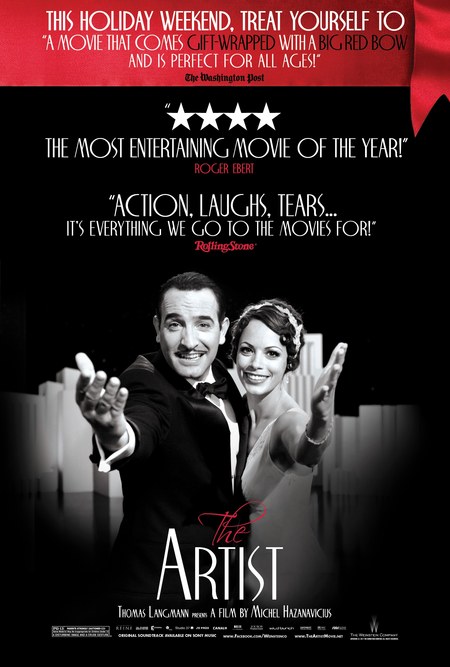
This is such a lovely movie.
Leave it to a French director to re-create the joy of classic Hollywood, silent-cinema with enough modern twists to keep it fresh and interesting.
Joyous is the one word that keeps coming to mind, and that shouldn't be surprising since there's an adorable Jack Russell Terrier in nearly every scene, let alone every shot.
The film follows the fall of a silent era star and the parallel rise of a new 'it' girl and then they fall in love. Singular periods of darkness and an interesting examination of the loss of purpose when faced with creative failure and loneliness keep the film from being too fluffy and generic. And the finale wraps the challenges and sadness up with a glorious bow and dancing! It's delightful!
Ramblings on film, Netflix and all the pretty moving lights and sounds that accompany them
Wednesday, February 1, 2012
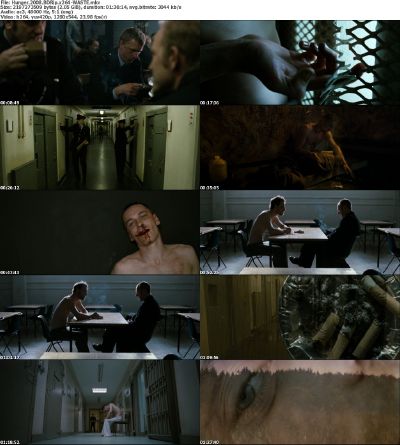
Hunger (2008) - % % % % %
This may be the best English language film I've seen in years.
"Hunger" is about hunger, literal and figurative. It tells stories surrounding the 1981 hunger strike in the prisons of Belfast, Northern Ireland. The many sides of hunger are present in these men's lives, starting with the simple breakfast of a guard, readying himself for his day at work, to the extremes of starvation experienced by the prisoners. There is the metaphorical hunger for freedom and the aspiration to greater lives desired by the IRA members, as well as the gnawing, aching growl which pervades everyone's existence at the prison.
I was unprepared for how beautiful and thoughtful this film is. It is brilliantly directed, by British artist Steve McQueen (not that Steve McQueen), with extraordinary intention throughout.
As an audience member, I feel I must warn some potential viewers that parts of the film are stomach churning. I do not think that one should turn away from any part of the human experience, especially since this is not a documentary and the thin veil of illusion ought to be enough to protect an audience from true trauma. But as I get older, I do occasionally wish I could extricate certain images and experiences from my mind. "Salo" often comes to mind. "Hunger" does not contain anything too violently graphic for contemporary audiences, but it may be upsetting to those with weak stomachs. Prison apparently may lead men to be resourceful and to use their basic materials in graphic ways to reject the means of their imprisonment. It's raw and the thought of it makes my eyes water.
I want to memorize the film. The shots are precise and potent. It's reminiscent of Antonioni in the framing, creating a feeling of alienation and abstraction from observing crumbs on a napkin or a car door opening. The times of the film are ominous and the direction draws out the violence and trauma implicit in every moment. Camera movement is judicious and, when used, infuses an operatic and hallucinatory tenor to the scenes.
I can't say enough. I feel like attempting to review this film and do it justice would involve spelling out every single frame of the film.
The acting is amazing. Michael Fassbender is so potent and charismatic that even in a near death state, practically comatose, he compels the viewer to observe the slightest movements of his facial muscles and the pace of his breathing for signs or indications of what he's thinking and experiencing.
Bravo, Steve McQueen. When I saw your Turner Prize winning piece, I never imagined you would develop such an extraordinary prowess with the medium. Bravo.
"Hunger" is about hunger, literal and figurative. It tells stories surrounding the 1981 hunger strike in the prisons of Belfast, Northern Ireland. The many sides of hunger are present in these men's lives, starting with the simple breakfast of a guard, readying himself for his day at work, to the extremes of starvation experienced by the prisoners. There is the metaphorical hunger for freedom and the aspiration to greater lives desired by the IRA members, as well as the gnawing, aching growl which pervades everyone's existence at the prison.
I was unprepared for how beautiful and thoughtful this film is. It is brilliantly directed, by British artist Steve McQueen (not that Steve McQueen), with extraordinary intention throughout.
As an audience member, I feel I must warn some potential viewers that parts of the film are stomach churning. I do not think that one should turn away from any part of the human experience, especially since this is not a documentary and the thin veil of illusion ought to be enough to protect an audience from true trauma. But as I get older, I do occasionally wish I could extricate certain images and experiences from my mind. "Salo" often comes to mind. "Hunger" does not contain anything too violently graphic for contemporary audiences, but it may be upsetting to those with weak stomachs. Prison apparently may lead men to be resourceful and to use their basic materials in graphic ways to reject the means of their imprisonment. It's raw and the thought of it makes my eyes water.
I want to memorize the film. The shots are precise and potent. It's reminiscent of Antonioni in the framing, creating a feeling of alienation and abstraction from observing crumbs on a napkin or a car door opening. The times of the film are ominous and the direction draws out the violence and trauma implicit in every moment. Camera movement is judicious and, when used, infuses an operatic and hallucinatory tenor to the scenes.
I can't say enough. I feel like attempting to review this film and do it justice would involve spelling out every single frame of the film.
The acting is amazing. Michael Fassbender is so potent and charismatic that even in a near death state, practically comatose, he compels the viewer to observe the slightest movements of his facial muscles and the pace of his breathing for signs or indications of what he's thinking and experiencing.
Bravo, Steve McQueen. When I saw your Turner Prize winning piece, I never imagined you would develop such an extraordinary prowess with the medium. Bravo.
Saturday, October 8, 2011
Hereafter - % % %
Why was this movie made?
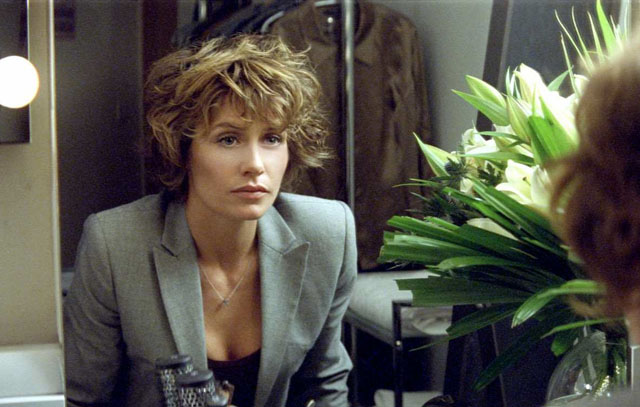
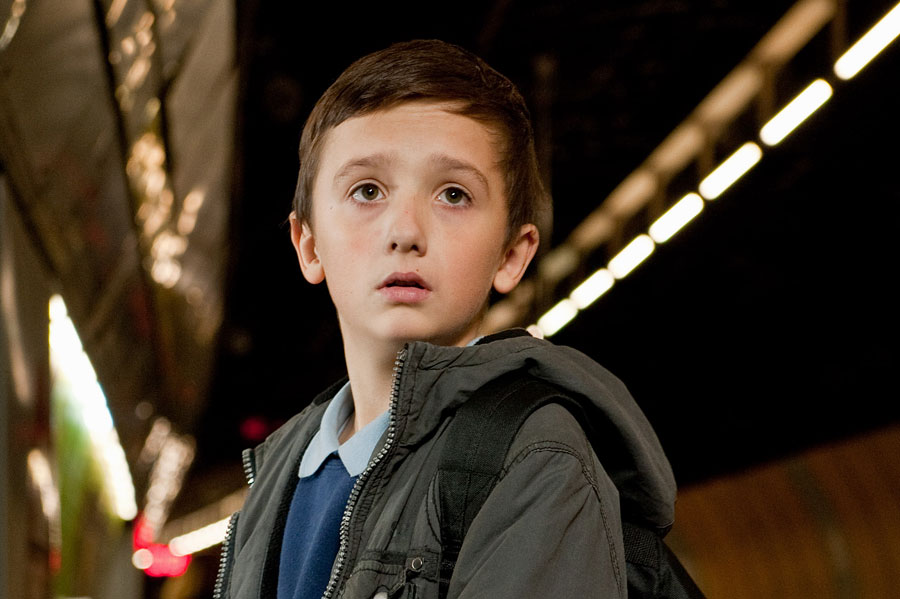
I suppose this film was intended to delve into the pessimistic resistance to an after-life by a skeptical society created by a man approaching the end of his life. Clint Eastwood, who directed and produced and composed the music, was 80 at the release of this film in 2010. He is approaching his end-time and has an extraordinary career recently capped with two Oscar wins for directing suspenseful adult dramas about murder, human sins, redemption and guilt, "Unforgiven" and "Million Dollar Baby". In interviews he compared this to a French film, and perhaps that explains why one of the three interwoven stories of the film is centered in Paris. This is the story of a French journalist who has a near-death-experience in a tsunami in south-east Asia, a twin boy who loses his brother and Matt Damon, a psychic who can't come to grips with his ability to communicate with the dead.
I credit this film for taking a premise I hold with enormous skepticism, a psychic who has visions when he makes psychical contact with others, and getting me to empathize with the character and suspend disbelief for the sake of the plot. But every time the film moves to another story, I am reminded that I don't understand why this film exists.
The French journalist experiences a great deal of resistance to her pursuit of the story and writes a book about the conspiracy to resist information about near-death-experiences and the possibility of an afterlife. In conjunction with the Matt Damon story, in which he has difficulty sustaining a regular life because of his ability's forced intimacy, and its physical and emotional strain upon him, the film seems to indicate the perspective that it's hard to deal with death but cruel to resist its presence in our lives. And yet, the issue of an afterlife feels unnecessary to this point. It feels hokey.
Friday, September 2, 2011
Rise of the Planet of the Apes - % % %
The joy of watching a gorilla attack a helicopter makes up for many of the unfortunate missteps of this prequel to the 1968 original, 'Planet of the Apes'. This film will still be enjoyable for those who aren't familiar with the original, but there are numerous hints and lines referencing it which will seem odd and out of place in this new film.
The Rise imagines how the Earth may come to fall into the hands of super intelligent chimps and gorillas through animal testing. It does make an interesting argument that, as Frida Pinto's superfluous character repeatedly makes, one can't or shouldn't control everything. And yet, this is a profoundly anti-science argument that none of us can accept because obviously we all benefit from immunizations and cell phones and so on. Rather than treating this film as a philosophical equal, it's best to discus it as nifty fantasy made possible by CGI.
And while this film is made possible by remarkable CGI, it isn't made good by it. I never once forgot that the chimp, Cesar, adopted and experimented on by scientist, James Franco, was CGI and I never really felt that much for him. As he enters his adolescence, he stops being cute and becomes sullen and grumpy, not helping me to empathize with the character. It's an interesting coming-of-age story and a father-son drama, but these fall apart upon closer examination.
Franco's character raises this ape from infancy, but doesn't quite seem to fully embrace the fathering role he claims. It made me confused at times when he was able to walk away from his son so easily, and to me this is the main problem with the resolution of the film.
But the plot is interesting and Cesar's road to adult independence is very well crafted. Kudos to the several listed screenwriters, the team that brought us 'The Hand That Rocks the Cradle'.
Basically this film is carried by the awesomeness of a bunch of monkeys kicking ass. They smash up several buildings and take over a San Francisco street, tearing up parking meters and hurling them through cop cars. And then they ***SPOILER ALERT*** move to the climax on the Golden Gate Bridge, which is pretty awesome. Like I said, a gorilla attacks a helicopter. It's fantastic and super cool. ***
Aside from that, the characters aren't engaging, the plot is interesting and then it's over. Sure, I'm maybe rethinking how the animals are sourced for testing and certainly may make a donation to a chimp sanctuary, but I'm not willing to go back to a world rampant with polio because of this movie. It doesn't really engage enough.
***SPOILER ALERT***The director pulls so many punches, having the apes spare human lives over and over again, although certainly some people were killed when they charged the police line on the bridge, but also with Franco. It's the director's choice to keep his character from having a greater emotional bond with Cesar. Franco's father dies in his arms and he remains stoic. My father broke down repeatedly the day his mother died and he's hardly a warm and fuzzy guy. It's terrible for a parent to die and it's also incredibly painful to say goodbye to a child, let alone to leave them in a prison or in a forest as they move to reclaim the planet. It's emotional, but Franco plays it strong and it just feels like a lost opportunity. ***
This film is interesting because of the very rational fear that all humans have of very strong animals. We are only in our position in the food chain because of our ingenuity and linguistic skills. We would very quickly be defeated by a stronger species if they ever gained such abilities. It'd be an amazing site to behold, too. And that's the only reason this film gets three %s rather than the two it otherwise would deserve. It's a good premise and the plot is well executed, but the characters are weak and the direction waters down the drama and excitement too often to keep it from being truly terrifying. Too bad. The end of human domination of the planet should be scary. Petrifying, in fact. Instead it's just kinda nifty. Too bad, indeed.
The Rise imagines how the Earth may come to fall into the hands of super intelligent chimps and gorillas through animal testing. It does make an interesting argument that, as Frida Pinto's superfluous character repeatedly makes, one can't or shouldn't control everything. And yet, this is a profoundly anti-science argument that none of us can accept because obviously we all benefit from immunizations and cell phones and so on. Rather than treating this film as a philosophical equal, it's best to discus it as nifty fantasy made possible by CGI.
And while this film is made possible by remarkable CGI, it isn't made good by it. I never once forgot that the chimp, Cesar, adopted and experimented on by scientist, James Franco, was CGI and I never really felt that much for him. As he enters his adolescence, he stops being cute and becomes sullen and grumpy, not helping me to empathize with the character. It's an interesting coming-of-age story and a father-son drama, but these fall apart upon closer examination.
Franco's character raises this ape from infancy, but doesn't quite seem to fully embrace the fathering role he claims. It made me confused at times when he was able to walk away from his son so easily, and to me this is the main problem with the resolution of the film.
Basically this film is carried by the awesomeness of a bunch of monkeys kicking ass. They smash up several buildings and take over a San Francisco street, tearing up parking meters and hurling them through cop cars. And then they ***SPOILER ALERT*** move to the climax on the Golden Gate Bridge, which is pretty awesome. Like I said, a gorilla attacks a helicopter. It's fantastic and super cool. ***
Aside from that, the characters aren't engaging, the plot is interesting and then it's over. Sure, I'm maybe rethinking how the animals are sourced for testing and certainly may make a donation to a chimp sanctuary, but I'm not willing to go back to a world rampant with polio because of this movie. It doesn't really engage enough.
***SPOILER ALERT***The director pulls so many punches, having the apes spare human lives over and over again, although certainly some people were killed when they charged the police line on the bridge, but also with Franco. It's the director's choice to keep his character from having a greater emotional bond with Cesar. Franco's father dies in his arms and he remains stoic. My father broke down repeatedly the day his mother died and he's hardly a warm and fuzzy guy. It's terrible for a parent to die and it's also incredibly painful to say goodbye to a child, let alone to leave them in a prison or in a forest as they move to reclaim the planet. It's emotional, but Franco plays it strong and it just feels like a lost opportunity. ***
This film is interesting because of the very rational fear that all humans have of very strong animals. We are only in our position in the food chain because of our ingenuity and linguistic skills. We would very quickly be defeated by a stronger species if they ever gained such abilities. It'd be an amazing site to behold, too. And that's the only reason this film gets three %s rather than the two it otherwise would deserve. It's a good premise and the plot is well executed, but the characters are weak and the direction waters down the drama and excitement too often to keep it from being truly terrifying. Too bad. The end of human domination of the planet should be scary. Petrifying, in fact. Instead it's just kinda nifty. Too bad, indeed.
Tangled - %
Disney's 50th Animated Feature is major tragedy. The animation quality aside, the film epitomizes all that is generic and shallow about the current studio. The plot is acceptable but the characters are cloying and obnoxious. The dialogue is some of the worst attempts at humor I've perhaps ever seen. Ever.
The central 'prince charming' is repulsive. In theory, through getting to know the princess, Flynn sheds his macho, smarmy charm and accepts his real self. We barely see any evidence of his sincere self and the oily, sociopath that he starts out as is so excessive and nauseating that it is impossible to shake through the weak resolution. It's not enough that he admits his real name is Eugene. It's not enough that he is willing to die in order to break the spell trapping his princess. It's a good turn, but the first guy we meet is so gross that there's little to engage the audience into caring about him.
The princess Rapunzel is pretty vacant and has very little personality. She's spunky in defending herself, but perhaps it's just naivety, really. She likes to paint and her best friend is a chameleon. That's it. Her naivety supposedly charms a bar full of medieval thugs in a hot second. It doesn't make sense, although it does set up the only good sequence in the film, a musical number about the dreams of ogre-like ruffians, including an odd little old man in his underwear dressed like cupid. That's so weird that it's wonderful.
And Pascal, the chameleon, is cute for sure. But how on earth does a chameleon end up in a tower in the middle of somewhere in Europe?
According to wikipedia, there are chameleons in Spain, so is this film set in Spain. It sure doesn't look like it at all. France or Germany perhaps. As opposed to a film like 'Princess and the Frog', with its embrace of a particular culture and time, 'Tangled' is a mish-mosh of fairy tale ahistorical associations. It's so vague as to be un-engaging and generic.
And the villain is the woman who kidnapped Rapunzel at an early age and raised her as her own, played by the talented, Tony-award winning, Donna Murphy.
Even though we, as the audience, know this, it's hard to want Rapunzel to hate the only person she's ever known and to want her to hate the woman she calls mother. It's too complicated psychologically for such shallow fare. And how is someone who has lived her entire life alone in a tower with three books, one window, and a chameleon so socially capable? It's an impossible leap of faith for any adult. The original Grimms Fairy Tale is dark and tortured, allowing for such leaps of faith, whereas a chipper Disney film just can't support such psychological murkiness or fantastical flights of fancy.
The animation is very impressive. The textures of fabrics and natural items like trees and leaves is very true to life. But this makes the slapstick violence and absurd physics of, for example, a man flying over a castle wall and landing on the saddle of a horse without injury too much to bear. There are just so many ridiculous slapstick head-bonks with a cast iron skillet and crotch kicks and leaping and landing without injury that I became irritated with the physical absurdity.
There is a whole sequence in which Rapunzel tries to shove the unconscious body of Flynn into a wardrobe but his floppy body keeps falling out, often on his face. He's unconscious because she's hit him in the head twice with a cast-iron skillet. Yeah. That's hilarious. I love Warner Bros. cartoons of Wile E. Coyote falling off cliffs, but the set up of emotionally connecting with the characters prevents me from giggling when they are tortured. The story doesn't need such stupidity and if these are meant to reinforce the fantastical setting, in reality they serve to push the audience out of the film with their absurdity.
It's a wreck and I sure hope no child develops their ideas of beauty, love or romance from such a crummy, poorly executed film. Bleck.
The central 'prince charming' is repulsive. In theory, through getting to know the princess, Flynn sheds his macho, smarmy charm and accepts his real self. We barely see any evidence of his sincere self and the oily, sociopath that he starts out as is so excessive and nauseating that it is impossible to shake through the weak resolution. It's not enough that he admits his real name is Eugene. It's not enough that he is willing to die in order to break the spell trapping his princess. It's a good turn, but the first guy we meet is so gross that there's little to engage the audience into caring about him.
The princess Rapunzel is pretty vacant and has very little personality. She's spunky in defending herself, but perhaps it's just naivety, really. She likes to paint and her best friend is a chameleon. That's it. Her naivety supposedly charms a bar full of medieval thugs in a hot second. It doesn't make sense, although it does set up the only good sequence in the film, a musical number about the dreams of ogre-like ruffians, including an odd little old man in his underwear dressed like cupid. That's so weird that it's wonderful.
And Pascal, the chameleon, is cute for sure. But how on earth does a chameleon end up in a tower in the middle of somewhere in Europe?
According to wikipedia, there are chameleons in Spain, so is this film set in Spain. It sure doesn't look like it at all. France or Germany perhaps. As opposed to a film like 'Princess and the Frog', with its embrace of a particular culture and time, 'Tangled' is a mish-mosh of fairy tale ahistorical associations. It's so vague as to be un-engaging and generic.
And the villain is the woman who kidnapped Rapunzel at an early age and raised her as her own, played by the talented, Tony-award winning, Donna Murphy.
Even though we, as the audience, know this, it's hard to want Rapunzel to hate the only person she's ever known and to want her to hate the woman she calls mother. It's too complicated psychologically for such shallow fare. And how is someone who has lived her entire life alone in a tower with three books, one window, and a chameleon so socially capable? It's an impossible leap of faith for any adult. The original Grimms Fairy Tale is dark and tortured, allowing for such leaps of faith, whereas a chipper Disney film just can't support such psychological murkiness or fantastical flights of fancy.
The animation is very impressive. The textures of fabrics and natural items like trees and leaves is very true to life. But this makes the slapstick violence and absurd physics of, for example, a man flying over a castle wall and landing on the saddle of a horse without injury too much to bear. There are just so many ridiculous slapstick head-bonks with a cast iron skillet and crotch kicks and leaping and landing without injury that I became irritated with the physical absurdity.
There is a whole sequence in which Rapunzel tries to shove the unconscious body of Flynn into a wardrobe but his floppy body keeps falling out, often on his face. He's unconscious because she's hit him in the head twice with a cast-iron skillet. Yeah. That's hilarious. I love Warner Bros. cartoons of Wile E. Coyote falling off cliffs, but the set up of emotionally connecting with the characters prevents me from giggling when they are tortured. The story doesn't need such stupidity and if these are meant to reinforce the fantastical setting, in reality they serve to push the audience out of the film with their absurdity.
It's a wreck and I sure hope no child develops their ideas of beauty, love or romance from such a crummy, poorly executed film. Bleck.
Sunday, August 21, 2011
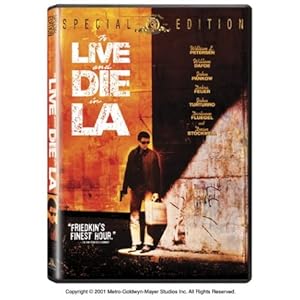
To Live and Die in LA (1985) - % % %
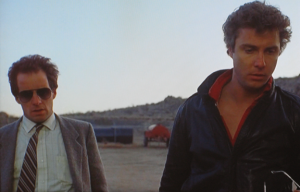
I decided to watch this hoping for some light and unchallenging '80s fun. The opening credits' style amused me and then I was informed that the soundtrack is by the band Wang Chung. 'Oh, yes,' thought I, 'this will certainly be goofy fun, at least.' The opening titles included the expected shots of smog-ridden LA, but also odd moments of women dancers
On a more serious level, I was curious about the performances of Willem Dafoe and John Tuturrow as the bad guys and the director, William Friedkin, who hasn't made a very good film since this, but who, in the '70s, directed 'The French Connection' and 'The Exorcist'.
The plot doesn't distinguish itself until the last half hour, following a base-jumping 80's Secret Service agent, played by William Petersen,
whose partner gets murdered investigating a counter-fitter, played by Dafoe. Dafoe plays an artist who lives in a fancy post-modern home with his nearly naked, exotic dancer girlfriend where he burns his other creations, oil paintings, if he doesn't approve of them. He's some oil-painting sociopath who makes a mean faux greenback.
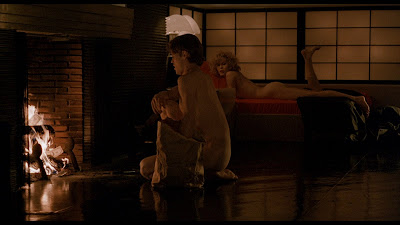
Not much of a villain, but then Petersen isn't much of a hero. He's a protagonist, for sure. He's determined to avenge his partner's murder and he uses his lover/confidential-informant to get information to catch him in a sting, while threatening her to have her probation revoked. Real classy. So he comes off like a scum-bag with contemporary eyes, but then the plot thickens. His determination to catch Dafoe leads him to wrangle his new partner, a young and seemingly-noble John Pankow, best known as Pauly's best friend, Ira, on 'Mad About You'. They can't get enough money from the secret service to make a buy from Dafoe so they decide to hold up a diamond smuggler and ***SPOILER ALERT*** inadvertently kill an FBI agent. The chase following the murder is fantastic and makes the movie worth watching on its own. Pankow starts breaking down and is totally freaking out because not only has his crazy-thrill-junkie partner gotten him to rob a diamond smuggler and use the stolen money to make an unauthorized buy from a counterfeiter but he has murdered an FBI agent. Upon attempting to make the final buy and arrest Dafoe a serious plot twist threw my mind into a tail spin. This twist is actually so good, I won't say any more. I've probably said too much already. You should see the movie. ***
I'm so surprised by this plot twist. I was enjoying the strange world created by the film. It took some suspension of disbelief, but I was enjoying the Wang Chung and Petersen's athletic careening through LA. But the twist made me sit up and pay attention. And then, in a major crisis of traditional plot, a beautiful and glorious scene emerges, full of fire and moral confusion. The film truly captures and relates the Film Noir crisis of moral ambiguity into a universal setting. ***SPOILER ALERT*** Instead of being lured into the darkness by a criminal mastermind or a beautiful, sexy woman, nor by accident or fate, the tragic hero is lured there by an arrogant, confident, handsome epic hero who sweeps poor Pankow up in his scheme for glory, vengeance and just order. And then he is face to face with Dafoe amidst his burning art studio. Engulfed by flames, Dafoe asks Pankow why he didn't try to stop Petersen when he knew it had already gone much too far. 'Because you couldn't turn in your partner.' Pankow is distracted by his moral crisis and the flames leaping about them. and Dafoe beats him to the ground. Just as Dafoe is about to set him on fire with the shredded counterfeit money, Pankow shoots him and he's engulfed by flames.
The film ends with Dafoe's attorney watching home sex movies of Dafoe and his girlfriend. This girlfriend leaves with her new girlfriend, another exotic dancer from the club, played by 'Frasier''s Jane Leeves.
Pankow goes to Petersen's lover's apartment and accuses her of setting them up to kill the FBI agent. He tells her that she's working for him now. She flashes to thinking of sex with Petersen and then cue the Wang Chung and credits rolling over industrial LA at sunset.***
Much of the movie is clumsy and flat, but the plot twist alone makes this well worth watching. The '80s fun cushions the stilted acting, plodding procedural scenes and the totally pointless plot line with Tuturro. Petersen is great fun playing this agent with unrestrained machismo, contrary to his fairly similar role in Michael Mann's 'Manhunter' from the following year.
And while this movie has an interesting moral core, it is still a bit ridiculous with contemporary eyes. The female characters are mannequins roaming about with the lure of sex trailing from their emaciated limbs. They are as relevant to the plot as the furniture. A group of black gangster associates of Dafoes are absurd stereotypes and four of these muscular thugs are defeated in hand-to-hand combat by a painter (Dafoe) and one other white dude in a puffy green army jacket that reminds me of neo-nazis. Stupid. And it's oddly gory. Several people get shot in the head and each time the film cuts to a quick close-up of their head, center screen, with a bullet hole in their face. Kind of fun, but it tells you the maturity level the film is aiming for. Then again, no one is watching this movie to see respectful portrayals of anyone. Watch it for the kitsch and the noir fun of the myth of LA in the '80s.
Thursday, May 26, 2011
Sister Kenny (1946) - % %
Why are biographic films so terrible? "Sister Kenny" is the heroic tale of an Australian nurse, played by Rosalind Russell, who discovers an unorthodox treatment for polio. Kenny is noble and resolute. Early in her life she considers leaving nursing to marry, but the children command her attention. She is practically made of granite. Her methods meet extreme resistance from doctors, all men, embodied in one figure, Dr. Brack, a mean old buzzard who dismisses her because she doesn't have a medical degree, reserved solely for men.
It's interesting to learn about the evolution in the treatment of polio, but as a film this is terrible. Kenny is clearly an excellent person from the beginning and Russell plays her as a stoic champion. She does attempt to exude humility and passion, but each of these deviations from the stoic quality serve to exaggerate her saintliness. It's a waste of time. There's no drama. Even as she stands up to the medical establishment, it isn't a real argument but rather a bombastic declaration of her greatness against an argument better elucidated an hour earlier in the film. It's repetitive and uninteresting. It is remarkable that the real Elizabeth Kenny faced so much resistance and it does remind me that medicine is not an exact science, but full of tradition and prejudices. The real Sister Kenny had a remarkable life and her story holds interest for history lovers, but the film makes this groundbreaking woman seem wooden.
Monday, May 23, 2011
You Can't Take It With You (1938) - % % % %
This is by far my favorite film by Frank Capra.
I would love to live in the zany Vanderhof household. Headed by a heartfelt, contrarian grandfather, played by Lionel Barrymore, the home is filled with dancing, cheering and firework experimentation. Everyone does whatever they want to have fun. It's delightful.
For some reason the naivety that grounds all Capra films bothers me far less in this film than in his others. I'm usually disgusted by the sappy, non-judgemental and non-analytical approach of Capra's films. Perhaps because this film is based on an already established play, Capra's hand in the storyline is limited.
And yet, watching this film in my 30s and in 2011, I am bothered by several issues in this film that I don't recall when I first viewed it at the age of 20. Why does this cheerful family, in which everyone does what they want, have servants? Rheba, played by Lillian Yarbo, sure seems like a member of the family and she seems pretty happy, but she's still seemingly a cook and maid. It feels odd through modern eyes for this egalitarian family to have a black maid. She is a great dancer, though.
I am also troubled by the simplistic resolution of the father-son conflict. I suppose I shouldn't hope for more dynamic and fulfilling resolution, rather than the pair of looks and smiles we are offered. Everyone forgives the evil, nasty banker who destroyed lives and cruelly proclaimed his superiority over all those unfortunate to be poorer than he. Having decried him in court a week earlier, everyone hugs him now that he's remorseful and playing a harmonica with grandpa. I get that this particular family is very open and forgiving, but it still feels like a bit of a stretch. And I suppose I have found the Capra naivety that I may have over looked in previous viewings. It's still my favorite Capra film, but in my opinion the bar is set pretty low. There are moments of sincere humanitarianism and great screwball comedy in his films, but these are drowned in the sappy, marshmallow gooeyness of the superficial resolutions and impossible Pollyannaism overall.
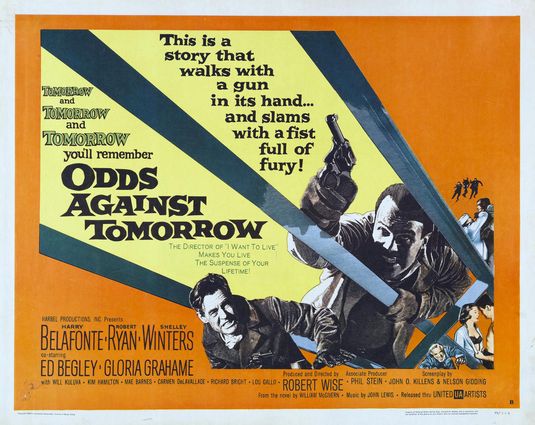
Odds Against Tomorrow (1959) - % % % %
Most noted for Harry Belafonte's role as a gambling addict, "Odds Against Tomorrow" is the first film noir to feature an African-American in a primary role. It is also a bleak film of failed lives overwhelmed by tension and fear, followed by rage. Produced by Belafonte's production company, the despairingly titled film works to give a context to racial tensions through the pitiable and harrowing lives contained by this heist flic.
The fascinating set of characters, mean and desperate, draw in the audience with their treacherous attempts at easing their struggles.
Robert Ryan costars as Earl Slater, a white ex-con with a chip on his shoulder and a temper to follow. He chafes at his inability to improve his lot or to avoid violence, ricocheting from bar fight to the door of his pretty, married neighbor, whom he degrades, manipulates and forcefully seduces.
As is often the case with films spearheaded by actors, the character development is primary to the script, and the action begins nearly halfway through the film, as Slater finally commits to a burglary scheme. Then he confronts his new partner, Belafonte, who is also desperate to cash in on the job to pay off his thug creditors from the race track. Slater's racism steams through his eyes and words, and the tension between the two is terrifying. There is no high ground. There is no noble character to raise the situation up to unify the two and bring them together. Instead, these troubled men are thrust together and head off to the heist. "It's gonna let us live again."
Best known for directing musicals like West Side Story as well as The Day The Earth Stood Still, director Robert Wise gives New York a harsh, frigid atmosphere. Bare trees and bitter winds penetrate the scenes, causing the actors to brace themselves against the world. Rather than filling this underworld with inky shadows, low angles peer up at the many shades of gray in this morally unhinged arena. Positioning the camera low to the ground, gives the impression of a towering weight about to fall on the characters at any moment. They appear isolated and imbalanced. Out on the streets, buildings loom up in the darkness; the sky is completely out of sight.
For a film about race and social issues, it holds up surprisingly well to this set of contemporary eyes. The score, although occasionally distracting, serves to layer anxiety and 50's jazz strains and intrigue. The conclusion gives the film the feeling of a morality tale, distracting from the potent tension created by these two actors. If the ending had only retained the seething interactions which engage the audience the most, this would have been a far more satisfying film.
Monday, December 13, 2010
Black Swan - % % % %
Startling and hallucinatory, Black Swan is a psychological horror story. Nina, played with every muscle by Nathalie Portman, achieves her lifelong dream of playing the Swan Queen in her ballet company's production of Swan Lake. Nina is a fragile perfectionist dominated by her live-in mother, a former dancer herself. Nina is already fraying at the edges from the physical pressures of professional ballet, so the elevation to her new role and the challenges, amplified by her director's sexual manipulations, lead her down the rabbit hole.
To succeed, we are told, one must give everything of themselves with abandon. Be free in the full sacrifice to one's craft. The greatest artists, athletes, whatever one admires, completely immerse themselves in their passion and are dedicated to perfection, n'est-ce pas? Nina releases her ego and identity in the complete submission of herself in the role of prima ballerina and she dissolves.
Directed by Darren Aronofsky, the film excels in this dissolution of reality. No other director achieves such a tangible, empathetic form of fear and nausea at the destruction of the human body. I left the theater after seeing Requiem for a Dream, thankful for my arms and for never having been so desperate or tragic in my life to succumb to prostitution. "Black Swan" makes me so grateful for the solidity of my body and my fingers and my bones and the entire thing. He achieves a rare squeamish terror that directors of Saw films should envy.

Furthermore, the disorientation of the climax and finale is complete and unpredictable. Unlike a film such as "Shutter Island", there are no explanations drawn out for the audience. The events swirl around Nina like the hallucinations they are. I've never seen such an accurate portrayal of the effects of Ecstasy on film. That alone is quite impressive. Nina's identity refracts like shattered mirrors as her self becomes her only real human connection and as she disintegrates into her new role.
Her body, her ultimate tool, rejects her and transforms itself, or perhaps she unconsciously transforms herself. Like a neurotic twitch that one cannot restrain, her skin and fingers and blood begin to alter against her will. A ballerina must be a master of her body, and her bulimia enables an illusion of physical and psychological control.
She is fragile and pale, like an egg, and as the pressure increases she cracks in a messy, messy way. It's exhilarating and spectacular and queasy and actually scary.
The casting is fantastic with the former prima, whom Nina replaces, played by Winona Ryder, and the new challenger played by Mila Kunis, who I am delighted to see in a drama. She is fantastic and utilizes her charisma to seduce with danger, rather than self-deprecating humor. The director of the company is slyly portrayed by Vincent Cassel using his sexuality and authority to embody that special kind of manipulative, seductive machismo. Rounding out the cast is Deborah Winger as the mother. She is quite terrifying yet believable. She resists the caricature of the failed mother living through her daughter and deftly plays the mind games of the most brilliant passive-aggressive matriarchs. Nathalie Portman deserves award considerations. She carries the film. Her character is nearly hysterical through the whole film yet she never becomes shrill or irritating. At the open of the film, I was saddened that such a good actress should immediately call to mind the stilted dialogue of Padme from Star Wars. To my relief she obliterated that character from my mind with her passion in this new role.
I will say as a draw back that the sound effects, while effective, were occaisionally over done and comical at first. Such a hallucinatory film is difficult for an audience to transition into at first and the sound effects just felt goofy for the first quarter of the film. Even towards the end, I found them heavy handed.
The pacing of the film was excellent and reminded me of the great psychological thrillers of Hitchcock. I am extremely impressed and thrilled that Aronofsky has returned to such dream-like territory. He is, in my opinion, at his best and most unique when creating a whirl-wind of the mind. His dryer character drama, "The Wrestler" was epic and poignant. But it lacked the joy and magic of creation that Aronofsky holds. If you are capable of extraordinary flights of fantasy, I'm not sure why you would ever tell such a miserable story, no matter how well told or illuminating it is. It'd be like Terry Gilliam directing Erin Brockovich. Why? And I think The Wrestler was a fantastic story of great depth and interest. I'm just so thrilled to get more from Aronofsky's imagination.
There is so much more I could say about the body manipulation inherent in such religious ferocity and the self-destructive commitment to success and work as a form of enslavement. What is success for? Is anyone really remembered in our ADD society? Are professional athletes any different than this woman crushing her toes to be beautiful? Is the drive for success always based in a lack of self-confidence and a frailty of identity?
Awesome. Scary. Trippy. Cool.
Saturday, December 11, 2010
You accidentally came to my website and welcome!
I am thrilled by this new addition to the blogger arsenal. Se here's the tracking of where my visitors have been from in the past. Pretty nifty.
Pageviews by Countries
United States 20
India 3
Switzerland 2
Spain 2
United Kingdom 2
Greece 2
Australia 1
Canada 1
Iceland 1
Jamaica 1
Since I don't know anyone in Greece or Jamaica, I'm going to guess that all the other views are also people who wandered here from Google. I hope you found it interesting. Now that I have confirmation that this blog does get some views even with the previously crummy way I've been keeping it, perhaps I shall be better motivated to improve my content. I am having an oddly sincere and probably nonstrategic moment, but I confess that I would like to offer something of value to the internet. I like processing my ideas about films through reviews, which could be useful for others. I'm not sure what will be most appealing for an audience. I'll mull it over, but if anyone has suggestions, I'm open to 'em. Thank you for visiting.
Pageviews by Countries
United States 20
India 3
Switzerland 2
Spain 2
United Kingdom 2
Greece 2
Australia 1
Canada 1
Iceland 1
Jamaica 1
Since I don't know anyone in Greece or Jamaica, I'm going to guess that all the other views are also people who wandered here from Google. I hope you found it interesting. Now that I have confirmation that this blog does get some views even with the previously crummy way I've been keeping it, perhaps I shall be better motivated to improve my content. I am having an oddly sincere and probably nonstrategic moment, but I confess that I would like to offer something of value to the internet. I like processing my ideas about films through reviews, which could be useful for others. I'm not sure what will be most appealing for an audience. I'll mull it over, but if anyone has suggestions, I'm open to 'em. Thank you for visiting.
The Road - % % % % %

I have not seen such an engrossing and encompassing film in many months. Something about the intensity of the genre demands the audience's attention, and yet this film was more penetrating in its sparseness and more emotional in its anonymous performances, making none its equal.
Marvelous. It is a miserable story. At its core is the essence of why we live. In creating a truly desolate world, the story from the novel "The Road", by Cormac McCarthy, strips away the other concerns in life that we are cluttered with living in modernity. This leaves the hunt for food, the fear of danger and violence and then the radical question, why live at all?
After an unknown apocalypse of such extreme proportions that all life aside from human has ceased, a father and son head south. Flashbacks expand on their situation, telling the backstory of a wife and mother, Charlize Theron, who finally gives up so completely and, spoiler alert, removes her layers of warm clothing to walk into the dark and cold wild. Alone with the boy, the man, masterfully played by Viggo Mortensen, trudges along fighting to get the boy to an age when he can survive on his own or prepare himself for the likelihood of merciful suicide. The film deftly allows in the most gruesome of realities without reveling in their monstrous power. Many of the surviving people have taken to cannibalism since all of the animals and plants are dead. The horrors of this environment are acknowledged and momentarily explored to establish the extreme danger for the pair, but are not embraced with prurient thrill as is often the case in the apocalyptic genre. The film is filled with fear and allows horror, but is more elegant than a more base thrill or shock. Rather, it holds the suspense of morality at its core. Is this the right decision? Can I live with this choice? What will be the consequence of my decision? And the suspense of these moments does not fade in the resolution of the events because the mind holds the tension of such moments long after they have passed.
This is a story written with a masterful understanding of the human condition at its essence. It is brilliant.
The film is dominated by gray and dirty landscapes of dead trees and decayed society. Interspersed with poignant close ups of hands clutching at tenderness and tears trickling down worn cheeks, the story keeps the man and his son at the center. They don't have names. They are unnecessary in this world since other people are a danger, and everything unnecessary has been stripped away. There are moments of joy interspersed accidentally in their journey. A swim under a waterfall. A discovered can of coke. The embroidered couch cushion with blue flowers in his parents' living room. Some elements of modern life that we occupy ourselves with remain in this wasteland.

The performances are universally real and compelling. I can't imagine how a director was able to elicit such a performance of raw fear, vulnerability and justice from a child. Extraordinary. The scenes involving strangers like Robert Duvall, Guy Pierce and the underused Michael K. Williams
(c'mon and hire this man more, people! He is Omar from the wire and the most extraordinary actor from the whole series! That man needs a better agent!) are filled with fear, curiosity and tenderness. They allow the film to breathe, filling moments with the real grace of life, human connection. And that is what leads to the unexpected happiness of the ending. It seems unimaginable until it finally happens and is in parallel with sparse, barren nature of the film. This visual metaphor, the boy and the man alone in a barren world illuminates the core of the story. Human connection is the reason for life. It's the reason to go on. It is what love is. It is what life is. I am astonished by the profundity elicited by this film and moved by how effective it is in pervading an audience with its story and themes. Magnificent. Magnificent.
Director John Hillcoat's previous film "The Proposition" takes another raw genre centered around survival and the human condition, the Western, and offers a bleak and cruel perspective as well, but not to the same effect. In The Proposition, familial loyalty is tested and the situations never create enough tension to mentally shake the audience into philosophical crisis in the same way that he manages to in The Road. And he's Canadian. I didn't think it possible for a country with a functioning NHS and little poverty to speak of to produce such a morose dude, but I guess those long winters can put one in touch with the power of bleakness. Really a fantastic movie. Brilliant.
Monday, November 15, 2010
Great Migrations - TBD
I am becoming a great aficionado of nature docs. Perhaps the great turbulence of human lives has become too much for me to endure on a regular basis. Nature docs offer a meditative beauty and a sense of scientific assuredness at their core.
Watching my first installment of "Great Migrations", I am struck by the power of the narrator. Don't get me wrong. Alec Baldwin is no David Attenborough. Attenborough's joy and tenderness make him second to none. But I love the poetic turn that Baldwin brings to this new series. I can't imagine Oprah pulling off describing the sun as "the great watch-maker". Instead of the humanizing folksiness attempted in "Life", "Great Migrations" astounds with the drama inherent in the ebbs and flows of the non-human world. The cinematography may not be as staggering as in 'Life', but this is entirely to "Great Migrations"' advantage. Rather than spending all of their money on a few shots and then replaying them in different segments, "GM" seems to be focusing its attention on the stories of the critters and the poetry of the dramatics. The direction of this series is actually quite touching and mesmerizing.
The creation of this series by National Geographic, rather than the Discovery Channel, aids the production in another way. National Geographic rightly should be the premiere creators of nature docs from the US. "Great Migrations" includes a clarifying device that other producers may not be able to produce with as much grace and precision: maps. It is so important to orient the stories. I hate being distracted, wondering where this is taking place.
All in all, I'm impressed and eager for the next installment. I sure do hope that they don't recycle stories and repackage shots like 'Life'. It ruined the entire series, but I guess there wasn't much there in the first place.
And now I'm off to watch Nature on PBS. It's about Wolverines!
Saturday, November 6, 2010
American Experience: We Shall Remain - % % % % %
It never ceases to amaze me how little I know about North American Native American peoples. I learned all about Aztecs, Maya, Incas and Nazcas. But I know diddly about Algonquin or Shawnee people and culture.
This series is beautifully constructed of recreated scenes and interwoven interviews with historians and descendants of the historical figures. Watching the first episode I was struck over and over how enlightening this program is. Our children's history books are mediocre and fail all of us.
500 Days of Summer - % % %
Nestled inside a nifty structure, moving throughout a relationship by days from middle to beginning to end, is a romantic comedy of mediocre and flimsy proportions. Zooey Deschanel and Joseph Gordon-Levitt carry the film admirably, but from the very beginning the narration indicates that this film is filled with crummy people who do stupid things and aren't worth our time. Really. The film tells us that these people suck at the beginning of the movie. Joseph Gordon-Levitt's character Tom is shown in flashback as a child and we are told that he sadly misunderstands love, and then we learn that Deschanel's character, Summer, gets everything more easily in life because she is cute. From the beginning we are told not to trust or respect the main characters. Bleck. Why should we want to watch this movie then?
I have a nit-picky problem with this film as well. According to the film, these characters are two years younger than me. There were no eight-year-olds listening to Joy Division when I was 10. I knew who they were because of my brother, seven years older than I. As I pieced together the time-line of Tom's life, I think this screenplay is 10 years old and no one thought to up-date it. In the intro, we see Tom as a child listening to "bad British pop music" while wearing a Joy Division t-shirt. Joy Division was British, but they were neither pop music nor bad. This is a total mis-characterization of the music. This odd misunderstanding of the music indicates a misunderstanding of the main character. If the screenwriter misunderstands this seemingly autobiographical story, how can the audience be expected to connect with the story?
I did get swept up in the the joyous moments, like the choreographed dance sequence following the consummation of the relationship. And while I enjoy a nicely designed set and costumes, this film went into a nauseatingly heavy-handed cutesy-ness of 60's sharp suits and brunette bangs. Heck, they play house in a set of Ikea furnished rooms, as if their romance is entirely an idealized facade. The film, like the furniture, may look cute at first, but it's made of hollow cardboard and won't hold up.
No one seems to have a sense of humor about themselves either. They are all so serious and sincere. Early on in the film we see Tom smashing plates in his kitchen, devastated at the loss of Summer, who just isn't that into him (no better explanation is ever offered). It's ridiculous but no one laughs at it. His precocious little sister speaks sage wisdom in a monotone to him trying to set him straight. A little laughter might release the intense pressure in Tom to hang on to his crummy relationship. A little levity and humorous self-reflection might endear the audience to the characters. In the end, Tom meets Autumn and starts it all over again. Bleck.
Sunday, March 28, 2010
The Proposal - % % %
I am genuinely stunned by how well executed this film is. I actually enjoyed it.
I am surprised because most romantic comedies are terrible. It's a genre with very clear rules and it's well worn territory. From the screwball comedies of the 30s and 40s to "When Harry Met Sally" in 1989, the genre hasn't changed that much. We know we want an opposed couple drawn together through circumstances out of their control but compelled by their often opposing desires. We want banter. We want charm. We want self-deprecating humor. And we want penetrating contemplative looks at pivotal moments.
If you've seen the trailer, you know that Sandra Bullock is the bitchy tough boss to Ryan Reynold's dutiful, hardworking, enslaved assistant. She is going to be deported and needs to marry him to keep her job as top editor that she has worked so hard for. They go off to tell his family in order to convince the immigration officer of the veracity of their relationship and of course, her cold exterior is broken by the love of a good family and small town in the beautiful wilderness, and he sees that she's actually a very special woman after all.
The Proposal fulfills the obligations of the romantic comedy and exceeded my very low expectations with a thoughtful screenplay and very charming actors. It develops the characters well, but not so much that the film loses its momentum. Betty White is charming and delightful as Ryan Reynold's Gammy, and as always, Reynolds looks amazing without his shirt on. Wow. Very well executed.
What the film lacks is truly real characters that don't rely on generally held preconceptions about certain people and their relationships. Romantic comedies often fall back on these preconceived notions as shorthand for genuine and well developed characters. So the films feel superficial because they are. While the characters are well rounded, the details that indicate their characters never feel finely drawn, unique and textured. We are told that Sandra Bullock's character has a tattoo that represents her dead parents, but the story is that simple. There's no texture to tell us how they died, how she was told, why she choose sparrows to represent her parents. We just hear the story pat and are meant to derive the meaning for the information from what? Other movies we've seen? Our own lives? It's too ambiguous to be truly resonant and powerful. It's why When Harry Met Sally is fantastic, the subtle details telling us so much about the characters and their lives and environments. And it's why The Proposal is well executed but not super. But with the few surprises that The Proposal works with, it's still charming and well made.
By the way, thank you to whomever encouraged Ryan Reynolds to bulk up. I am really grateful. I even watched Amityville Horror just for the two or three scenes with his steaming torso. Shizzle is riCockulous.
Also. mad-props to Sandra Bullock for not being a skinny, tragedy but a slammin, curvy, svelte woman at 45. She doesn't look tortured like Renee Zellweger or Madonna, nor extraordinary like Halle Berry. (But who does?) I have a lot of respect that she never boobed up like Demi Moore. She is beautiful but not tortured or fake. And that in Hollywood, unto itself, may be reason enough for an Oscar. Well, if not that then some kind of lifetime achievement award at least.
PPPS There's a great moment when Bullock gets down on her knees in her tight, posh suit and stacked heels to propose to Reyynolds and because of her proper attire can barely get back up again. I think there need to be more moments of comedic mockery of women's fashion expectations. What competent woman would wear something that immobilizes her so? Ridiculous.
PPPPS Also Oscar Nunez deserves a frickin Golden Globe for his role as Ramone, the Alaskan small town's caterer, general store manager, exotic dancer and marital officiant. His creepy flirtations are fantastic! He brilliantly meanders across the friendly/sexy line wobbling between endearing and skeevy. I love it!
Wednesday, March 17, 2010
Breaking Bad - % % % %
Fantastic show built on brilliant acting and witty writing. But I must fault it for a few mediocre members of the cast, such as the wife, and the often pedantic cinematography.
I just watched an episode from the second season in which Jesse, played by Aaron Paul, is thrown out of his house, and then booted from a high school friend's house, and then rejected over a pay phone by another friend and then his bike gets stolen. He breaks into the tow lot where his RV/cook house is being stored and falls into a port-a-potty. It's gross and tragic and while climbing from the blue ooze he cries like a little baby. Once in the RV he collapses on the floor and covers his head with a gas mask to protect from his own stench. It's awesome and brilliant!
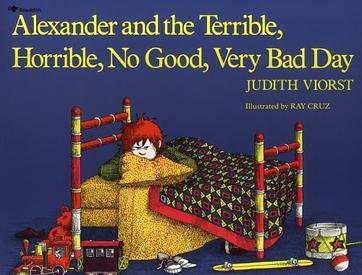
It's like a new chapter in Alexander and the Terrible, Horrible, No Good, Very Bad Day.
Subscribe to:
Posts (Atom)